|
Private and Public Sponsorship
"Sponsorship is a
business relationship between a provider of funds, resources or
services and an individual, event or organisation which offers in return
rights and
association that may be used for commercial advantage in return for the
sponsorship investment." (BDS)
"A partnership between an organisation and another organisation or event in which the sponsor publicly endorses an activity an ties its reputation with that of the organisation or event being sponsored" (Murdoch)
What Sponsorship Can Achieve For The Rights Holder
What Sponsorship Can Achieve For The Sponsor
-
Awareness
-
Enhancing
brand/corporate image
-
Encouraging brand
shifting
-
Integration with the
community
-
Customer/trade
promotions
-
Employee
incentives/benefits/recruitment
-
Product
showcasing/sampling
-
Product launches/press
and sales conferences
-
Differentiation from
competitors
What can go wrong with sponsorship?
DW Germany | 30.06.2006
Doping Scandal Knocks Germany's Ullrich Out of Tour de France
Germany's Jan Ullrich, out of the Tour de France because of his
connection to Spain's blood-doping scandal, has become a fallen hero
just one day before the start of an event he was tipped to win.
The
Tour de France was thrown into its biggest crisis since the 1998 drugs
scandal following the suspension of three of its biggest names on
Friday.Germany's
Jan Ullrich, Spain's Francisco Mancebo and Italy's Ivan Basso were all
dropped after being implicated in a doping investigation in Spain.
Organizers suggested even more riders could also be suspended from their
teams.
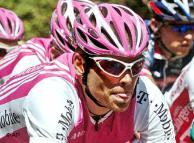 The
1997 winner Ullrich, and his Spanish teammate Oscar Sevilla, were
suspended by T-Mobile when fresh evidence from the ongoing doping probe
-- which had implicated them among a reported total list of 58 riders --
arrived late Thursday. The
1997 winner Ullrich, and his Spanish teammate Oscar Sevilla, were
suspended by T-Mobile when fresh evidence from the ongoing doping probe
-- which had implicated them among a reported total list of 58 riders --
arrived late Thursday.
Less
than an hour later, the CSC team pulled yellow jersey hopeful Basso out
of the race due to the suspicions aroused by his name being on the
list.
Ullrich,
a hero in his native country since winning the 1997 Tour, was expected
to challenge strongly if not win the Tour de France this year.
The
list of those riders implicated in the investigation was published
widely by the Spanish media on Thursday after reporting restrictions
were removed by the investigating magistrate.
Strong chances
The
32-year-old Ullrich, coming to the end of his career, has had one thing
in his head this season -- to triumph in the Tour de France on the
Champs-Elysees on July 23. His
strong T-Mobile team would certainly have been up to the task of
supporting him to victory after last season's disappointment, when he
finished third overall.
Welcome decision
The director of the German anti-doping agency (NADA) Roland Augustin welcomed Ullrich's exclusion."Thanks to this affair, the discussion of the fight against doping will now properly start," Augustin said."To
be honest I am shocked by the matter. But the decision by the T-Mobile
team has been excellent. They did not hesitate and immediately suspended
a rider who had a chance of victory."
Code of conduct
An
ethical code of conduct -- to be agreed upon by all teams and riders --
has been the backbone of the race organizers' policy since the scandal
of 1998, which was pivotal in the creation of the World Anti-Doping
Agency.The
code means that even without conclusive proof any rider implicated in
an ongoing doping investigation can be forced off the Tour.
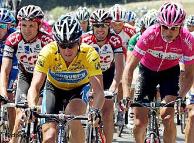
Disappointing end for Ullrich
This
year was the last on Ullrich's contract with T-Mobile, which pays him
an annual salary of 2.5 million euros ($3.2 million), and everything was
going according to plan for a win in France following victory in the
Tour of Switzerland earlier this month. Ullrich,
who often starts training again much later than other riders and with a
few surplus kilos, looked on top of his game on the Swiss streets.
Up
to Friday, his image seemed to have been cleaned up following
aberrations earlier in his career which at one point earned him a
six-month drugs ban in 2002.
BBC November 2007:
T-Mobile ends cycling sponsorship
|
|
T-Mobile is to end sponsorship of its cycling team after a succession of doping scandals.
Britons Mark Cavendish and Bradley Wiggins now look set to ride for the rebranded Team High Road.
"We came to this decision to separate our brand from
further exposure from doping in sport," said T-Mobile chief executive
Hamid Akhavan.
Less than two weeks ago, T-Mobile rider Patrik Sinkewitz was given a one-year ban for taking illegal substances.
In June, several former T-Mobile riders, including Tour de France winner Bjarne Riis, admitted past doping.
Deutsche Telekom, the German telecommunications giant and
umbrella company for mobile phone division T-Mobile, had been
sponsoring cycling since 1991.
It signed a new deal - supposed to run until 2010 - after this year's Tour but will now negotiate a separation.
|
Guardian 2009:
AZ Alkmaar will wear shirts without a sponsor on them when the team face Arsenal in the Champions League because DSB Bank NV has been declared bankrupt.
Although
AZ have already received this season's sponsorship payments from the
bank, the club hope exposure on international television could entice a
future sponsor to step forward.
The club said in a statement that it decided to remove the logos after consulting with the bank.
|
Please form three groups and discuss: How to avoid negative image-transfer between sponsor and event?
After 15 min. please present your findings.
|
Sponsorship in times of economic crises:
"The year just ending marks an historic milestone the sponsorship
industry would rather not have achieved. For the first time, less money
was spent on sponsorship by North American companies than in the prior
year.
The 25th annual year-end industry review and forecast from IEG SR
reveals that spending shrank 0.6 percent in ’09 to $16.51 billion,
representing a loss of $100 million that previously had gone to
properties.
Those unprecedented numbers reflect a marketplace that never
recovered from the economy’s freefall toward the end of ’08. That
collapse and related developments (automaker bankruptcies, public and
government criticism of TARP-recipient spending, etc.) devastated
spending from certain quarters of the industry and put other companies
into lock-down mode." www.sponsorship.com
Should companies scale back
rather advertisement or rather sponsoring if the marketing budget is shrinking?
Public Sponsorship:
Private companies want to sell their products and enhance their image in a competitive market.
Why do public entities also sponsor events?
http://www.stadtwerke-flensburg.de/home/unternehmen/sponsoring.html
Sponsoring
Sponsoringleitfaden der Stadtwerke Greven
Die Stadtwerke Greven sind sich ihrer Verantwortung für
unsere Stadt und ihre Kunden bewusst. Dieser Verantwortung stellen wir
uns in vielerlei Hinsicht: Wir fördern und unterstützen Menschen, die
sich für unsere Heimatstadt engagieren.
In
Zeiten steigender Energiepreise und sinkender Erträge müssen wir
sparsamer als früher wirtschaften. Wir werden uns unserer
gesellschaftlichen Verantwortung für Greven nicht entziehen – weder
jetzt noch in Zukunft!
Doch als wirtschaftlich tätiges Unternehmen
sind wir unseren Gesellschaftern verpflichtet. Diese haben ein Recht
darauf, dass wir mit den uns anvertrauten Mitteln professionell und
sorgsam umgehen. Und unsere Kunden verlassen sich darauf, dass die
Stadtwerke Greven sparsam und effizient wirtschaften.
Wir wollen
auch in Zukunft bürgerschaftliche Initiativen in Greven fördern. Dies
geht jedoch in Zeiten knapper Budgets nur, wenn es klare und faire
Regeln gibt, unter welchen Bedingungen und in welchem Umfang dies
geschieht.
Was ist Sponsoring?
Sponsoring meint die
Unterstützung von Personen, Gruppen, Vereinen oder Institutionen durch
Geld, Sachmittel oder Dienstleistungen. Sponsoring basiert auf dem
Prinzip der gegenseitigen Partnerschaft. Die Förderung erfolgt dabei
nach bestimmten Regeln.
Was wird von uns gefördert?
Die
Stadtwerke Greven fördern technische, soziale, kulturelle oder
sportliche Projekte. Die geförderten Projekte müssen als
Mindestvoraussetzung die folgenden acht Grundsätze erfüllen:
- Ihr Projekt kommt vielen Grevenern zugute, nicht nur einer Minderheit.
- Ihr
Projekt hat ein klares Ziel. Der Erfolg des Projekts kann daran
gemessen werden, ob dieses Ziel in einem bestimmten Zeitraum erreicht
wurde.
- Ihr Projekt ist mittel- bis langfristig angelegt, aber befristet.
- Die Stadtwerke Greven fördern nur Projekte mit transparenter Mittelverwendung.
- Ihr Verein, Ihre Initiative wird durch das Projekt nicht abhängig von den Stadtwerken Greven.
- Wir fördern keine laufenden Betriebsausgaben.
- Ihr Projekt findet im Versorgungsgebiet der Stadtwerke Greven statt.
- Die Stadtwerke Greven fördern keine politischen Parteien und keine weltanschaulichen oder religiösen Organisationen.
Sponsoring-Leitfaden der Stadtwerke Greven
Darüberhinaus
sind noch ein paar weitere Dinge für eine Förderung massgeblich, die
wir in einem Leitfaden für Sponsoringaktivitäten zusammengestellt
haben.
In diesem Leitfaden finden Sie u.a. auch Informationen zur
Antragsstellung, sowie Musteranträge und weitere Informationen über das
Sponsoring durch die Stadtwerke Greven:
Download aktueller Sponsoringleitfaden (PDF-Datei)

|