|
Wed 11.45-15.30 h H
12
4 SWS Course
Workload:
60 h classroom work / 120 h self-study
ECTS points: 6
Course organisation:
First two sessions: Introduction, overview
From third session:
First part:
Student Presentation/discussion (two or three students per group) of one chapter/topic of Hannam/Knox Understanding Tourism (60 min.);
Group work on exercises, chaired by Prof. Arlt (30 min.)
Exercises online: http://www.uk.sagepub.com/booksProdDesc.nav?prodId=Book229253&#tabview=samples
Second part: Management case in connection with topic of first part (group work, chaired by Prof. Arlt)
Extra date: Workshop
Each chapter (2-11) has to be read by all participants before session!
Examination:
Presentation (using PowerPoint, Prezi, MindMap or other visualization tool) (30%)
- Assignment Paper
(12-15 pages per person) to be handed in before Feb. 1, 2013 (70%)
|
1
|
26.9.
|
no class
New date: Sat. Dec. 8
|
|
|
3.10.
|
Public Holiday
|
|
2
|
10.10.
|
Introduction: What are we talking about
Course organisation
International
Tourism Management: Jobs and Skills
Kick-off assignment
|
|
3
|
17.10.
|
Lecture: Understanding
Tourism
Example:
Sinus Groups
|
| 4 |
24.10.
|
Presentation 1:
Regulating Tourism
Exercise
Business Case: Subsidies
|
|
5
|
31.10.
|
Presentation 2:
Commodifying Tourism
Exercise
Business Case:
Free service -> paid service
|
|
6
|
7.11.
|
no class
New date: Sat. Dec. 8
|
|
7
|
14.11.
|
Presentation 3:
Embodying Tourism
Exercise
Business Case:
Free service -> Changing bodies
|
|
8
|
21.11.
|
Presentation 4:
Performing Tourism
Exercise
Business Case:
Experimental
tourism, I am the product
|
| 9 |
28.11.
|
Presentation 5:
Tourism and the Everyday
Exercise
Business Case:
Couchsurfing
|
|
10
|
5.12.
|
Presentation 6: Tourism
and the Other
Exercise
Business Case: Ostalgia
|
|
|
Sat. 8.12.
|
10.00-13.15 h, 14.00-17.15
h Workshop
My tourism service provider for different
customer groups
|
|
11
|
12.12.
|
Presentation 7: Tourism
and the Environment
Exercise
Business Case: Windparks
|
| 12 |
19.12.
|
Presentation 8: Tourism
and the Past
Exercise
Business Case: Heritage
|
|
|
Christmas Break
|

|
|
13
|
9.1.13
|
Presentation 9: Tourism
and Mobility
Exercise
Business Case: Space Travel
|
|
14
|
16.1.13
|
Summing up, Feedback, preparation written assignment
|
|
|
|
|
|
|
|
|
Understanding Tourism
Each student please think
about and write down what are the most important forms of tourism
in your home country and who is involved in tourism. If you want,
you can form groups per country.
After
15 minutes, let's compare.
Understanding
Tourism Ch. 1
Q&A about Ch. 1
Main points of Ch. 1
Decision
on assignment groups
| Presentations |
Group members
(*indicates Group speaker) |
| Regulating
Tourism 1 |
|
| Commodifying
Tourism 2 |
Shahriyar Humbatov
Elizaveta Medvedeva
Ekaterina Dogodkina |
| Embodying
Tourism 3 |
|
| Performing
Tourism 4 |
|
| Tourism
and Everyday 5 |
Ann-Kathrin Findorf
Anna-Katharina Reimann |
| Tourism
and Otherness 6 |
Sylwia Wyderka
Tina
Ludwig |
| Tourism and
Environment 7 |
Savvina Kateryna
Liogchii Tatiana
Bisiriyu Paula |
| Tourism and Past
8 |
Taotao Luo
Xiaolu Zhang
Mengshi Zhao |
| Tourism and Mobility
9 |
|
| |
|
|
|
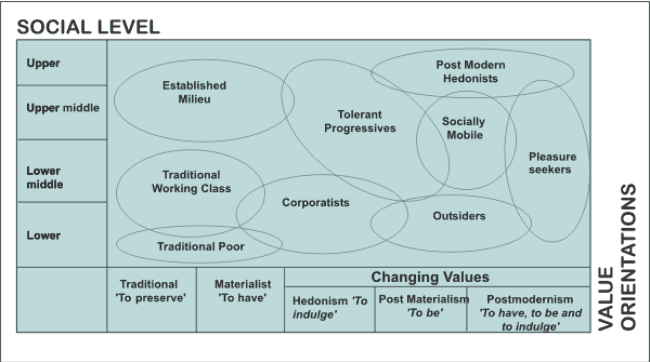
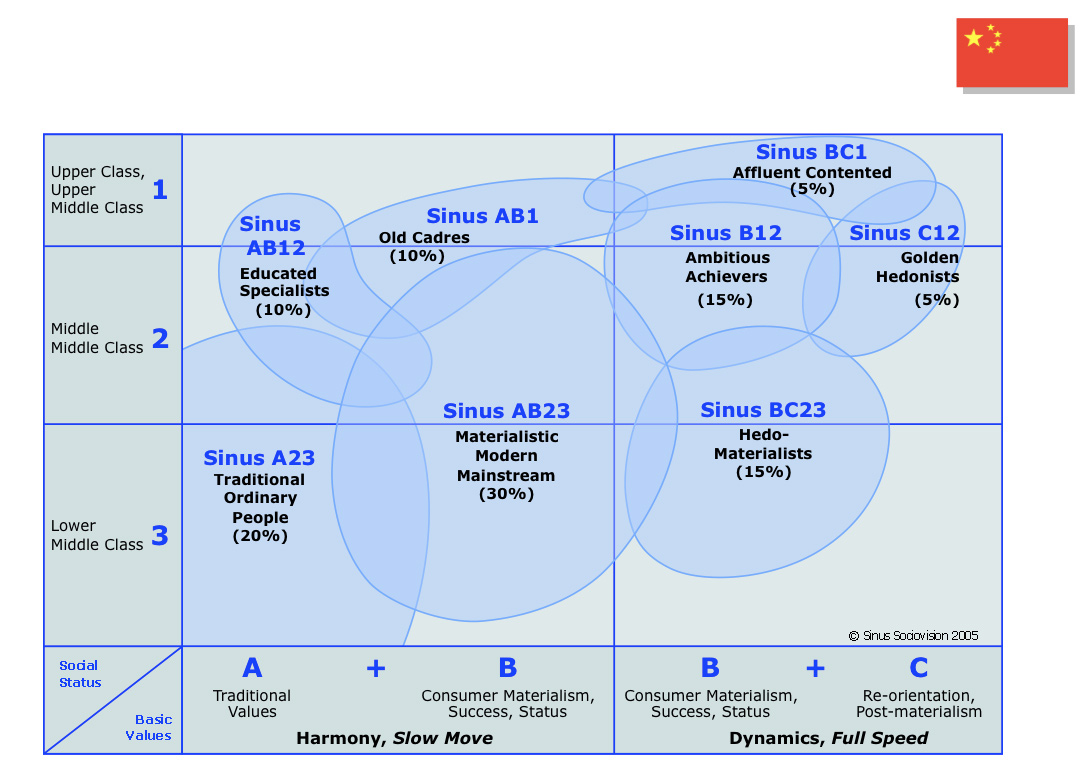
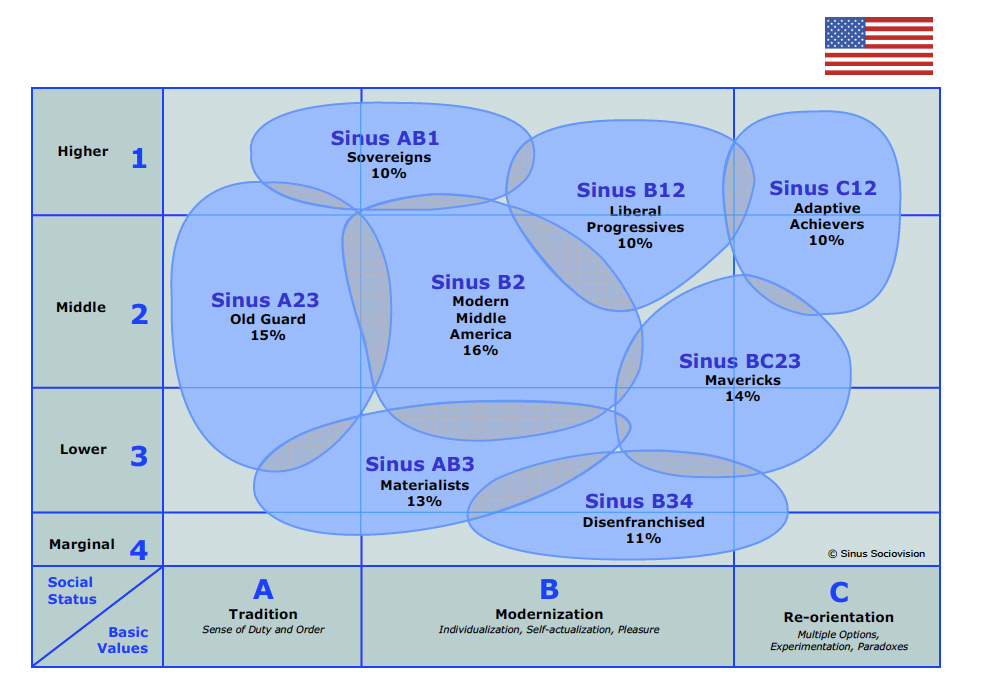
EXAMPLE SINUS GROUPS
From the website of Sinus
Institute:
Sinus-Milieus® are target groups that really
exist – a model which groups people according to attitudes to life and
ways of living.
The Sinus-Milieus® link up demographic criteria like education,
occupation, or income with the actual life worlds of the people, i.e.
with their everyday-life, their different attitudes to life, and their
ways of living: - Which fundamental values are important?
- What are the everyday attitudes towards work, family, leisure, money, or consumption?
This
way , the human being and his/her entire social environment and
everyday-life system of reference is drawn into the field of vision.
The Sinus-Milieus® have been established as a scientific model and
are constantly updated via concurrent research and monitoring of
socio-cultural trends. Leading brand product manufacturers, major
service providers, political parties and public service clients, many
advertising, media and PR agencies as well as several publishers have
been working with this concept using it for strategic planning and
operative implementation – both on the domestic and the international
level.
Sinus-Milieus® are developed and validated individually for each
country. From China to Canada, Sinus has realized this milieu concept in
18 countries so far. In addition, the Sinus Institute has generated the
Sinus-Meta-Milieus® which serve as basic target groups for
international marketing and reflect cultural commonalities and dividing
factors in intercultural comparison.
To reach people or target groups, respectively, it is essential to
get to know how these people feel and think, to understand their values,
their aims in life, their ways of living and their attitudes – and it
is necessary to comprehend their everyday-life worlds "from within", to
actually "immerse" in them. Only this way is it possible to attain a
true-to-life picture of what makes people tick – and the way to move
them.
sinus-milieusDeutschland.pptx

Im August 2010 hat das Institut Sinus Sociovision ein verändertes Gesellschaftsmodell Deutschlands vorgestellt. Es verschwand das sogenannte Milieu der DDR-Nostalgiker und ging zum Teil in das prekäre Milieu auf, hinzu kam das expeditive Milieu.
Sinus-Milieus mit ihren Definitionen:
- Konservativ-etabliertes
Milieu: Klassisches Establishment mit Exklusivitäts- und
Führungsanspruch, zeigt aber auch Tendenz zum Rückzug
- Liberal-Intellektuelles
Milieu: Aufgeklärte Bildungselite mit liberaler Grundhaltung und
postmateriellen Wurzeln, hat starken Wunsch nach Selbstbestimmung
- Milieu
der Performer: Effizienz-orientierte Leistungselite, denkt global, hohe
IT-Kompetenz, sieht sich als stilistische Avantgarde
- Expeditives Milieu: Unkonventionelle, kreative Avantgarde, individualistisch, sehr mobil, digital vernetzt, sucht nach Grenzen
- Bürgerliche
Mitte: Leistungs- und anpassungsbereiter Mainstream, bejaht die
gesellschaftliche Ordnung, strebt nach beruflicher und sozialer
Etablierung sowie nach Sicherheit und Harmonie
- Adaptiv-pragmatisches Milieu: Zielstrebige, junge Mitte der Gesellschaft mit ausgeprägtem Lebenspragmatismus und Nutzenkalkül
- Sozialökologisches
Milieu: Idealistisch, konsumkritisch, globalisierungsskeptisch, besitzt
ausgeprägtes ökologisches und soziales
Gewissen
- Traditionelles Milieu: Ordnungsliebende Kriegs- und Nachkriegsgeneration, kleinbürgerlich oder der Arbeiterwelt verhaftet
- Prekäres Milieu: Um Teilhabe bemühte Unterschicht, Zukunftsangst und Ressentiments
- Hedonistisches Milieu: Spaß- und erlebnisorientiert, verweigert sich den Konventionen und Leistungserwartungen der Gesellschaft
UK:
Example Target Group for Tour Operators: Postmaterialistic
50+ couples

Example:
Travel
behaviour family A (married couple, no kids, no car, no TV, 55 years, Professor/writer,
German/Swiss),
Within 12 months:
Private
trips:
October:
long weekend Hallig Hooge. Holiday flat (higher end of market),
self-organized travel by train/bus/ferry
December
(Christmas): 10 days Jordan. Self-organized travel to Amman (taxi/air),
stay in Amman with friends (private flat), travel in Jordan with
rented car (driver Jordanian friend), stay in *** to ***** hotels
(special prices arranged by Jordanian friends)
Jan-April:
Several short trips to Switzerland. Self-organized travel to Switzerland
(train/air), stay in private flat
September:
10 days bicycle trip Dolomite mountains / Venice (Biennale art exhibition).
Self-organized travel (train/air), bicycles rented with local company,
stay in *** - **** hotels (booked through internet pages of hotels
or portals (venere.com, hrs.com).
Professional
trips Professor:
October:
University Conference Mexico, organized by employer
November:
WTM Fair London, self-organized (taxi/air), stay in *** hotel
December:
Tourism Conference Trier, self-organized (taxi/air), stay in ***
hotel
February:
Tourism Workshop Jamaica, organized by inviting tourism ministry
March:
ITB Berlin, self-organized (train), private stay with friends
April:
PATA Annual Meeting Macao, self-organized (train/air), stay in *****
hotel
April:
Travel Fair Beijing, self-organized (train/air), stay in ****
hotel
May:
Tourism Conference and Lecture University of Sunderland,
self-organized (train/air), stay in *** hotel provided by
University
July:
Tourism Conference Brighton, self-organized (train/air), stay in
*** hotel
September:
UNWTO conference, Tourism Fair Hangzhou and lecture at local university, self-organized (train/air/taxi),
stay in ***** hotel
Professional
trips Writer:
October:
Visiting publisher in Poland, self-organized (train/air), stay in
private flat with friends
Jan-April:
Four month stay in Switzerland as writer-in-residence, trips within
Switzerland, self-organized (train/air), stay in studio provided
by city or in private flat with friends
September:
Literature conference in Poland, self-organized (train/air), stay
in *** hotel
Which
destination with what kind of offers can successfully attract such kind
of people?
Discuss
in smaller groups, present results.
|